
Коммунальные. Выставлено. Собрано. Просрочено — на виду.
Коммунальные платежи в кипрских застройках — покрывающие обслуживание бассейна, озеленение, охрану, обслуживание лифтов и страхование здания — выставляются поквартально и собираются с жильцов. Большинство застройщиков ведёт это в Excel, который никто не обновляет постоянно. Tektor отслеживает каждый бюджет, каждый счёт и каждую просроченную сумму по всем вашим завершённым застройкам на одном экране.
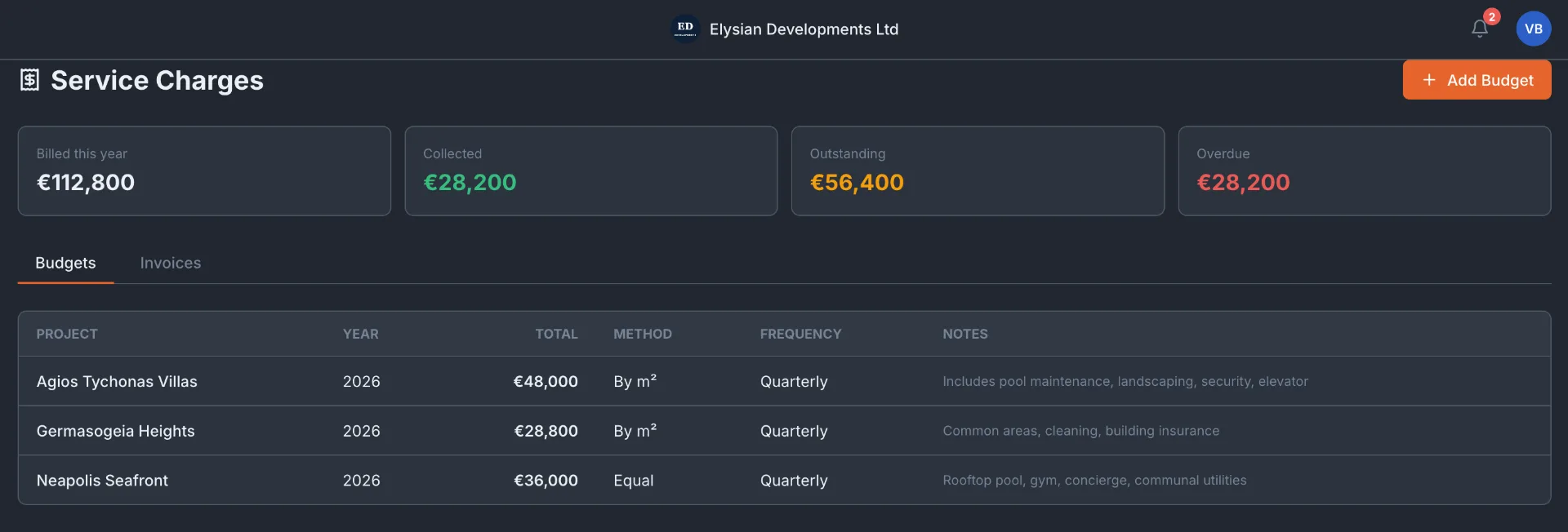
Обзор коммунальных по всему портфелю
Четыре плитки KPI показывают всю картину: Выставлено за год, Собрано, Непогашено и Просрочено — по всем вашим застройкам. Таблица «Бюджеты» ниже разбивает годовой бюджет коммунальных по проекту, метод выставления (по m² или равное деление) и частоту. Ваш финдиректор видит всю постпродажную денежную позицию менее чем за десять секунд.
Выставление по жильцам со статусом оплаты
Вкладка «Счета» показывает каждый отдельный счёт коммунальных: жильца, период (Q1 2026, Q2 2026), сумму к оплате, срок и статус оплаты — Оплачено, Просрочено или Ожидается. Просроченные счета помечаются красным. Жильцы видят свои счета и историю платежей в Портале покупателя.
Несколько методов выставления — по m² или равное деление
Настраивайте коммунальные по проекту методом выставления, подходящим структуре вашей застройки. Крупные застройки вилл обычно используют равное деление. Многоквартирные дома считают по m² пропорционально площади каждой квартиры. Оба метода поддерживаются и считаются автоматически.
Частые вопросы
Могут ли жильцы платить коммунальные через Портал покупателя?
Жильцы видят свои непогашенные коммунальные во вкладке «Финансы» Портала покупателя. Интеграция онлайн-оплаты в планах. Пока инструкции по оплате включены в счёт.
Можно ли отслеживать коммунальные по нескольким застройкам?
Да. Обзор коммунальных агрегирует все застройки. Таблица «Бюджеты» показывает годовой бюджет и параметры выставления каждого проекта.
Какие частоты выставления поддерживаются?
Поддерживаются ежемесячная, ежеквартальная и годовая частоты выставления.
Отправляет ли Tektor автоматические напоминания жильцам о просрочках?
Автоматические email-напоминания о просроченных коммунальных в планах. Пока застройщики могут отправлять объявления через модуль «Объявления» как ручное напоминание.
Закажите бесплатное 30-минутное демо
Реальные экраны. Ваш тип проекта. Без слайдов и продаж.